

The question
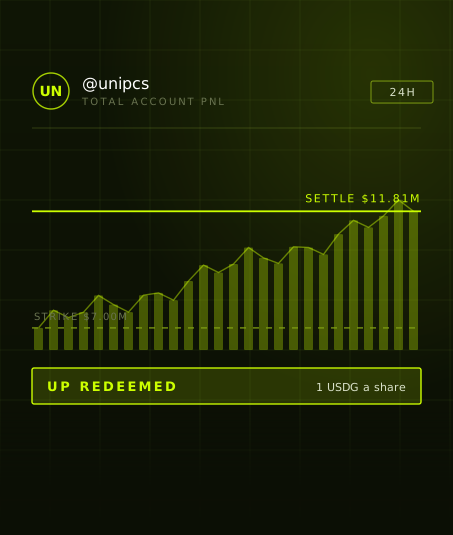
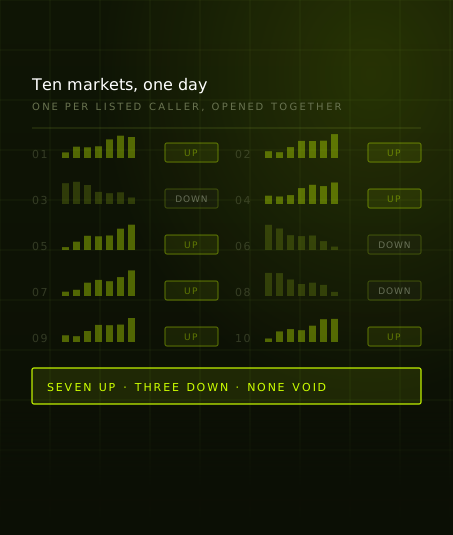
Will @ether_monk be up over the next 7 days? The same yes-or-no question the one-day markets ask, with room to breathe. One side pays, and the horizon is the only thing that changed.
Both windows settle on the sign of the same number, which means the oracle only has to be right once for every market on the platform to be right.
How it settled
The strike was the median of the three snapshots nearest the open, a week earlier. The settlement was the median of the three nearest the close. Lower than the strike settles the put.
Nothing about the trader's book entered the calculation. A position repricing overnight moves total PnL and should, because that is the exposure being traded. A deposit does not move it at all.
Holders of DOWN redeemed at 1 USDG a share. Holders of UP were left with nothing, having paid for the cheaper side of a question they got wrong.
What it paid
Anybody who changed their mind mid-week did not have to wait. A position is worth whatever the market maker will pay for it at any moment, and selling early is a first-class path rather than an escape hatch.